ICT Solutions for Airport Operations
Smart Ticketing, IoT, and Automation
Name: Mohammed KA Abushamla
ID: 2520140047
Course: Information & Comm. Technologies
University: istanbul esenyurt üniversitesi
2. Abstract
This project explores how integrated ICT solutions—specifically Internet of Things (IoT) for baggage tracking and automated smart ticketing—are transforming modern airport operations. The aim is to demonstrate how these technologies significantly improve operational efficiency, enhance passenger security, and streamline the overall travel experience while managing complex logistical data.
3. System Overview & Components
- Hardware: IoT Sensors (RFID baggage tags), Automated E-Gates, Biometric Scanners, Self-service Kiosks.
- Software: Flight Info Display Systems (FIDS), Baggage Handling System (BHS) AI, Security Screening Algorithms.
- Network: High-speed Public Wi-Fi, Secure Operational LAN, Private 5G for ground crew.
- Data: Passenger Manifests, Real-time Baggage Logs, Security Biometrics.
4. ICT Architecture (Visual 1)
Block Diagram of Airport Network Zones
(Airline Databases / Gov. Security)
(Kiosks/Desks)
(Scanners/Cameras)
(E-Gates/Biometrics)
(Baggage IoT)
5. Data Flow Structure (Visual 2)
Passenger & Baggage Data Journey
6. Real-World Case: Istanbul Airport (IST)
Istanbul Airport utilizes a state-of-the-art Integrated Airport Management System. Key implementations include:
- E-Passport Gates: Rapid biometric processing reduces border control wait times.
- Advanced Baggage Handling: A 42km long conveyor system using IoT tracking to minimize lost luggage incidents.
- Mobile App: Provides real-time "Home to Gate" flight tracking and indoor navigation.

Figure 1: Digital integration in modern airport terminals.
7. Benefits & Challenges
Benefits
- Efficiency: Automation reduces manual check-in times by ~40%.
- Experience: "Single-token" biometric travel eliminates needing to show boarding passes repeatedly.
- Oversight: IoT data allows predictive maintenance of airport facilities.
Challenges
- Cybersecurity: Critical infrastructure is a high-value target for ransomware attacks.
- Privacy: Collection of biometric face/fingerprint data raises ethical storage concerns.
- Cost: Retrofitting old terminals with IoT sensors is capital intensive.
8. Data Visualization (Visual 3)
Impact of Automation on Passenger Processing Times
*Estimated average time from entry to gate. Automation reduces queuing significantly.
9. Conclusion
ICT is no longer optional but essential for modern airports to handle increasing global passenger traffic sustainably. The shift towards "Smart Airports" has proven to enhance security and passenger satisfaction.
Future Outlook: The next decade will see a heavier reliance on AI for predictive security scanning and fully contactless, "walk-through" biometric corridors.
Smart Baggage Tracking
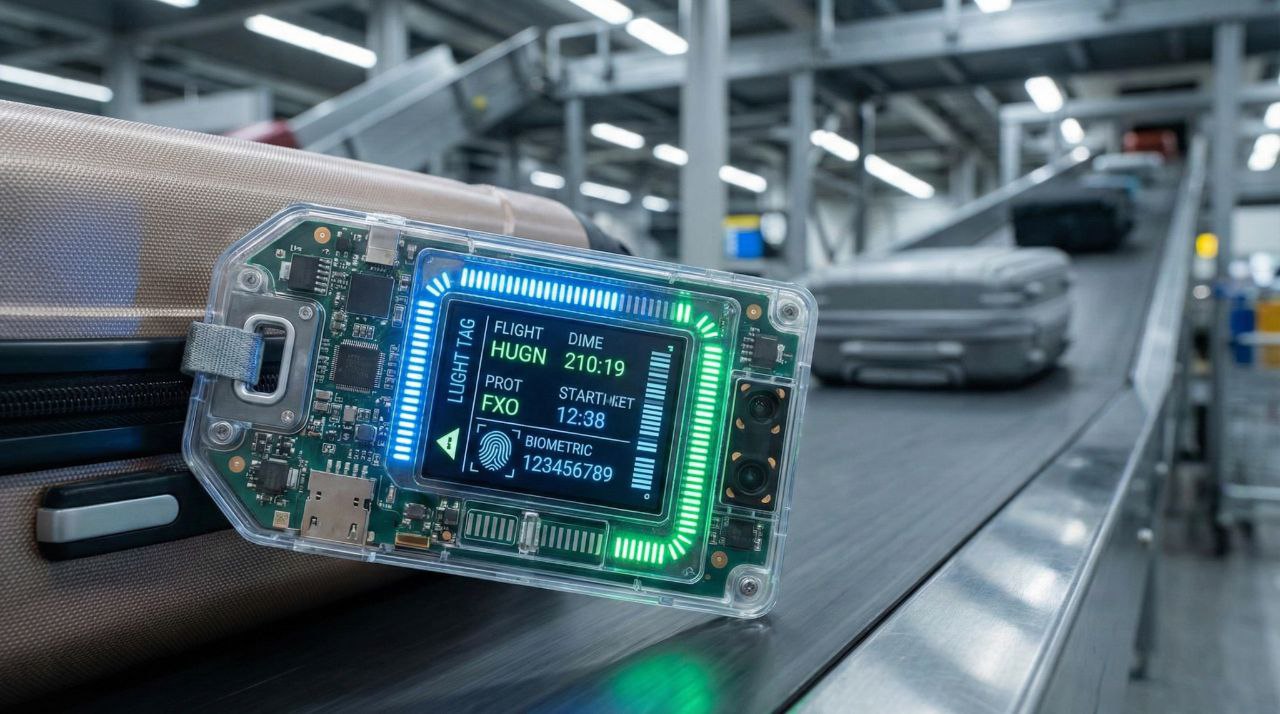
IoT-enabled RFID Tags